Introduction - - - - - - - - - - - - - - - -
Global tech giants are embracingdeep learning, autonomous driving, AI medical, voice recognition, image recognition, intelligent translation, and the world-shattering AlphaGo, all behind the deep learning is playing a magical role. Deep learning is the mainstream technology that enables the realization of artificial intelligence from concept to prosperity. Computers trained by deep learning no longer operate passively according to instructions, but begin to learn from experience autonomously, like naturally evolving beings.
The author of this book, Terrence Schernowski, one of the world's top ten scientists in artificial intelligence and a pioneer and founding father of deep learning, experienced firsthand the cold winter of deep learning in the 1970s through the 1990s. But he and a group of pioneers, utilizing big data and ever-increasing computational power, have finally beenneural networkSignificant breakthroughs in algorithms have led to the realization of an AI blowout.
As a general knowledge work in the field of deep learning, this book presents the development, evolution and application of deep learning in a grandiose stroke through a 3-part panoramic view, for the first time retracing the development of the deep learning wave in the past 60 years and the spiral of artificial intelligence from the perspective of a first-hand observer and predicting the business picture of the intelligent age in a forward-looking manner.
作者简介 · · · · · ·
Terrence Sejnowski Terrence (Terry) Sejnowski
He is one of the world's top ten AI scientists, one of the only three living members of the four National Academies (National Academy of Sciences, National Academy of Medicine, National Academy of Engineering, and National Academy of Arts and Sciences), and President of the NIPS Foundation, a global conference for AI professionals.
As a pioneer of neural networks, as early as 1986, Terrence co-invented the Boltzmann machine with Jeffrey Hinton, bringing neural networks into the research and application boom, turning deep learning from a fringe subject to a core technology that Internet technology companies look up to, and realizing the blowout development of artificial intelligence.
Terence is currently the Director of the Computational Neurobiology Laboratory at the Salk Institute for Biological Studies (the most productive life sciences institute in the United States), and a leader in the $5 billion Brain Research through Advancing Innovative Neurotechnologies (BRAIN) program. The Brain Research through Advancing Innovative Neurotechnologies (BRAIN) program.
Terence is also the master of the world's largest online learning platform Coursera's most popular course "Learning how to learn" (Learning how to learn), through a systematic explanation of the underlying knowledge of brain cognition, so that the learner can change the mode of thinking, improve the ability and efficiency of learning. Currently, the number of learners of the course has exceeded 3 million.
Reasons for Recommendation - - - - - -

Related Books
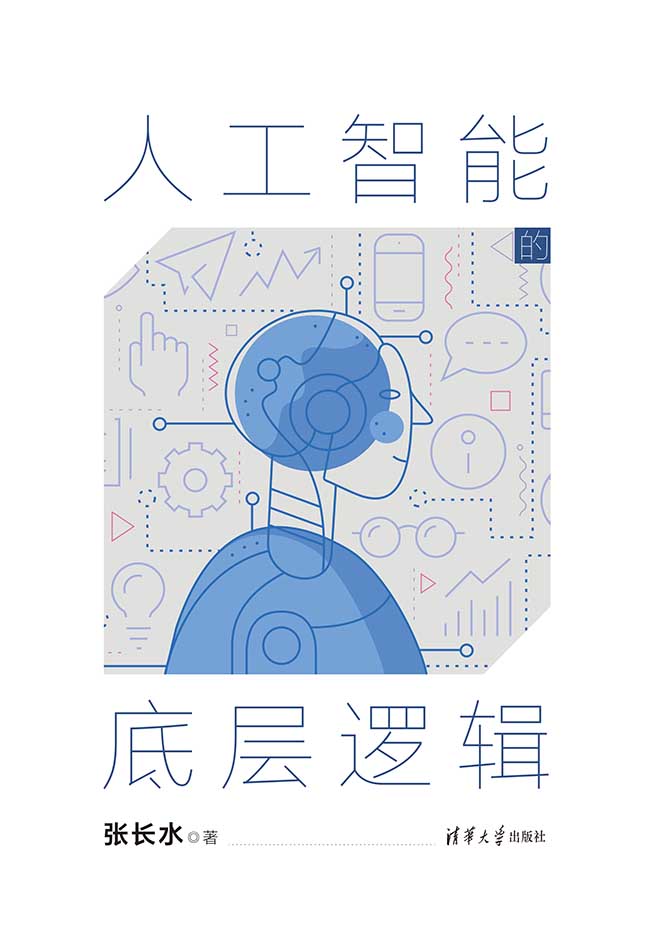
From search, perception, and learning to reasoning, this book establishes a knowledge framework for understanding artificial intelligence from a general education perspective, making it ideal for Chinese readers who wish to grasp the technical principles and limitations of the technology.
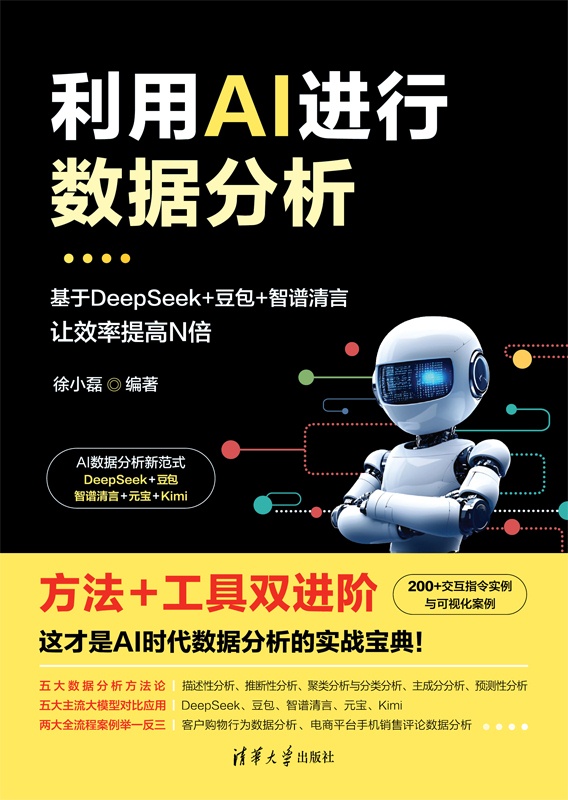
Data Analysis with AI—Using DeepSeek, Doubao, and Zhipu Qingyan to Boost Efficiency by a Factor of N
Integrate tools such as DeepSeek into your daily analysis workflow, focusing on prompt creation, data analysis tasks, and result validation; ideal for operations, business, and data professionals who want to learn by doing.
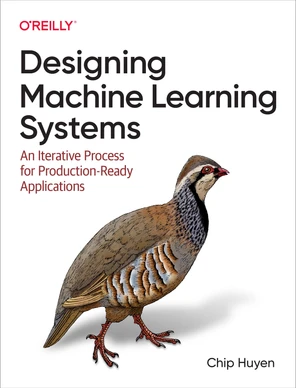
Designing Machine Learning Systems (Original English Edition)
From data, evaluation, and deployment to continuous monitoring, gain an understanding of the engineering trade-offs involved in implementing machine learning systems. Ideal for engineers and technical leads who want to turn offline models into long-term, maintainable services.
The Era of Collective Intelligence: How to Coexist with AI
Drawing on the perspectives of work, learning, and creativity, this book explains how to collaborate with AI, verify results, and maintain human judgment. It is ideal for readers who want to incorporate AI into their daily work without blindly relying on it.
No comments...