Connecting the Principles of Large Models to Practical Applications Through Illustrations
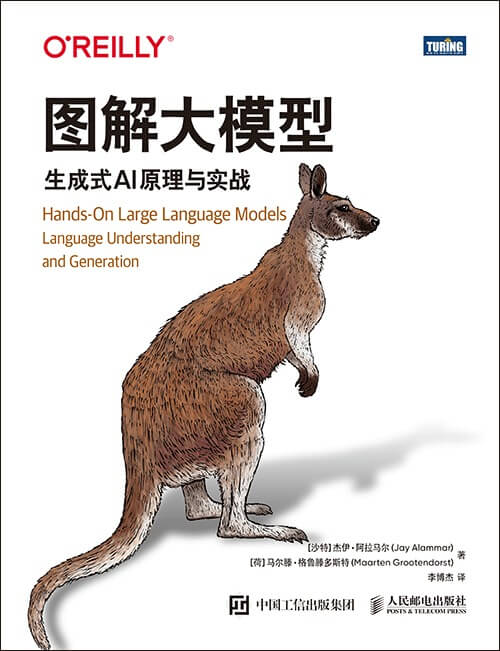
Tokens, embedding vectors, Transformers, and RAG—these terms frequently appear in introductions to AI tools. *Illustrated Guide to Large Models: Principles and Practical Applications of Generative AI* uses visual explanations to place these concepts within the context of how models process information, and then extends this understanding to applications such as text classification, search, and generation.
The book is organized into sections on understanding language models, using pre-trained models, and training and fine-tuning models. For readers who are already familiar with AI tools and are looking to systematically build a solid technical foundation, this structure makes it easy to establish a learning sequence and select chapters based on specific practical problems.
What should I focus on learning?
- How does the model represent text:Starting with word segmentation and embeddings, understand how text is transformed into information that a model can process.
- Search for "How to connect to the generator":Learn about semantic search, re-ranking, and RAG, and understand how search results contribute to answers.
- How to Use and Adjust the Model:Gain exposure to methods such as text classification, clustering, prompt engineering, and fine-tuning, and understand the technical aspects required for different tasks.
Who Should Read This, and How to Choose Chapters
This course is suitable for learners with some Python experience, developers looking to transition into AI applications, and product managers who need to understand technical solutions. The illustrations help build intuition, but the hands-on sections still require an understanding of code and basic data processing workflows.
Recommendation: Beginners should first establish the connections between tokens, embeddings, and the Transformer; readers working on knowledge bases or on-site search can focus on semantic search and RAG; and those needing to tackle classification or domain-specific tasks should then move on to the training and fine-tuning sections. You can use the code resources made publicly available by the authors to verify your understanding.
Reasons for Recommendation and Practical Tips
The value of this book lies in its ability to organize disparate technical terms into a coherent learning path that allows for continued exploration. Once you have a solid grasp of these fundamentals, you’ll find it easier to formulate specific questions and communicate effectively with developers when reviewing sections on “semantic search,” “knowledge base Q&A,” or “model fine-tuning.”
The original English edition was published in 2024, and the Simplified Chinese edition was published in 2025. The libraries, models, and APIs described in this book may continue to change; when putting the concepts into practice, you should verify the accompanying code against the current official documentation. The fact that the book is illustrated does not mean that no prior knowledge is required, nor does it imply that the examples in the book cover all the latest models. We recommend starting with a small experiment before expanding the scope of your tasks.



 简体中文
简体中文  English