
Life 3.0
Explore the new era of life and reveal the future evolutionary path of intelligent life.
A step-by-step guide to implementing a GPT-style language model using PyTorch, covering text processing, attention mechanisms, pretraining, and fine-tuning. Suitable for developers with a basic understanding of Python who want to understand the underlying implementation of large language models.

After calling the model interface, if you want to continue exploring how text is converted into vectors, how attention is calculated, and exactly what the training loop updates, *Building Large Models from Scratch* provides a coherent learning path. Centered around PyTorch implementations, the book guides readers step by step through building a GPT-style language model, followed by pretraining and task fine-tuning, thereby placing disparate technical terms within a data flow that’s easy to follow.
The author of this book is Sebastian Raschka, whose name is rendered in Chinese as 塞巴斯蒂安·拉施卡. The original title is Build a Large Language Model (From Scratch). The Simplified Chinese edition was translated by Qin Libo, Feng Xiaocheng, and Liu Qian; it was published by People’s Post & Telecommunications Press in April 2025 as part of the Turing Programming Series. It is 325 pages long, and its ISBN is 9787115666000. It is available fromTuring Official Book PageView version information; the original English edition was published by Manning in September 2024.
The previous chapters established the basic concepts of language modeling, covered text data processing, and gradually implemented the attention mechanism. At this stage, it’s helpful to focus on tensor shapes: After a given text segment undergoes tokenization, embedding, and attention calculations, what do the various dimensions of the data represent? If you can visualize these transformation relationships, reading the model’s code later will be much easier.
The middle section organizes the components into a GPT model capable of generating text, followed by an introduction to pretraining on unlabeled data. When following along with the code, it is recommended to check three aspects simultaneously: whether the inputs and targets are correctly matched, how the loss reflects prediction errors, and how the generated results change after parameter updates. Understanding the model architecture, training process, and generation process separately will help you pinpoint issues in subsequent experiments.
The final two chapters cover fine-tuning for text classification and following instructions, demonstrating how the same underlying architecture can be adapted to different tasks. The appendix includes supplementary material on PyTorch, training loop optimization, LoRA, and more; the Chinese edition also features an appendix on inference models. For the table of contents and accompanying learning resources, please seePages from the Original Manning Bookup toAuthor's Code Repository.
The author lists a solid foundation in Python programming as a key prerequisite for this repository; experience with PyTorch is helpful, but you can catch up by referring to the appendix. If you are not yet familiar with functions, classes, arrays, and program errors, it is recommended that you practice these fundamentals first; if you simply want to quickly build a chatbot, prioritize using off-the-shelf models and application development resources, and then come back to follow the implementation approach outlined in this book.
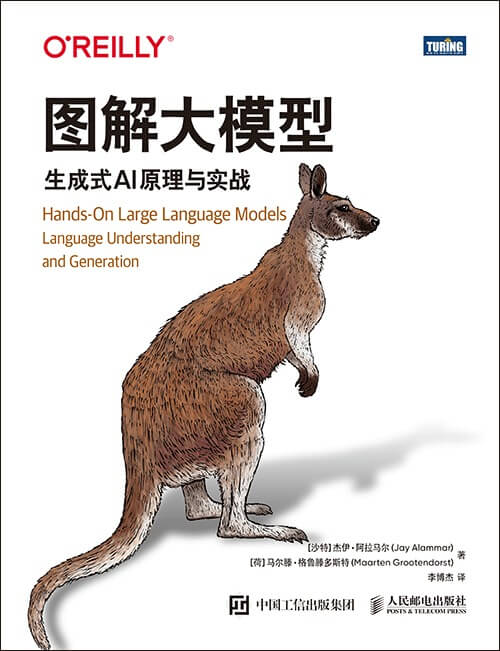
These three books can address the learning objectives of implementation, applied decision-making, and conceptual understanding, respectively. The comparison below is organized by reading objectives to help you determine the best order in which to read them.
| Dimensions of Comparison | Building a Large Model from Scratch | AI Engineering | A Visual Guide to Large Models |
|---|---|---|---|
| Key Focus Areas | Internal Model Implementation and Training Process | Building Applications Using Base Models | Model Concepts, Representation, and Generative Applications |
| Learning Methods | Writing and Debugging PyTorch Chapter by Chapter | Comparing Alternatives and Making Engineering Decisions | Combining Illustrations and Practical Examples |
| More Appropriate Targets | Understand how the various modules work together | Improving Application Quality, Cost, and Maintenance | Develop an intuitive understanding and become familiar with common techniques |
| Suggested Learning Outcomes | Explain and modify a small model | Develop verifiable application solutions | Connecting Concepts and Running Representative Examples |
If you’re preparing for in-depth training and fine-tuning, you can make this book your primary resource; if you’d like to first build a knowledge map of large models, start with *Illustrated Guide to Large Models*; if you already have specific product requirements and your focus is on retrieval, evaluation, and deployment, *AI Engineering* is a better place to start. When deciding on the order, base your choice on the problems you need to solve right now.
What makes this book worth the time is that it enables readers to question and explain a model: why a particular layer is needed, where the data changes shape, what the fine-tuning modifies, and why the generated results are influenced by the training data. Once you master this approach to analysis, you’ll be better equipped to read open-source model code, compare training strategies, or troubleshoot implementation errors.
The author notes that the code in the main chapters is designed to be learnable on a standard laptop and will utilize a GPU when available; actual execution time depends on the device, model size, and experimental setup. The educational implementations and small-scale training examples do not represent the resource requirements for training state-of-the-art foundational models, nor do they guarantee capabilities equivalent to those of commercial AI assistants. When using the accompanying repository, users should distinguish between the main content covered in the book and the later-added extensions, and should record dependency versions and random seeds to facilitate reproducing the results.


 简体中文 简体中文
  English