
Seed-OSS
ByteDance's open-source 36 billion parameter-long contextual big language model supports 512K tokens, a controlled mind budget, excels in inference, code and agent tasks, and is freely commercially available under the Apache-2.0 license.
Anthropic's Claude 5.5 series offers the Opus, Sonnet, and Haiku tiers, covering complex programming, knowledge work, and high-frequency summary extraction tasks.
 Claude 5.5
Claude is a family of large language models developed by Anthropic, designed for writing, programming, document analysis, and multi-step agent tasks. The current models support text and image input, text output, multilingual understanding, and tool invocation; it is important to distinguish between the models’ capabilities and the operational environments provided by applications such as Claude Web and Claude Code.Overview of Official Models
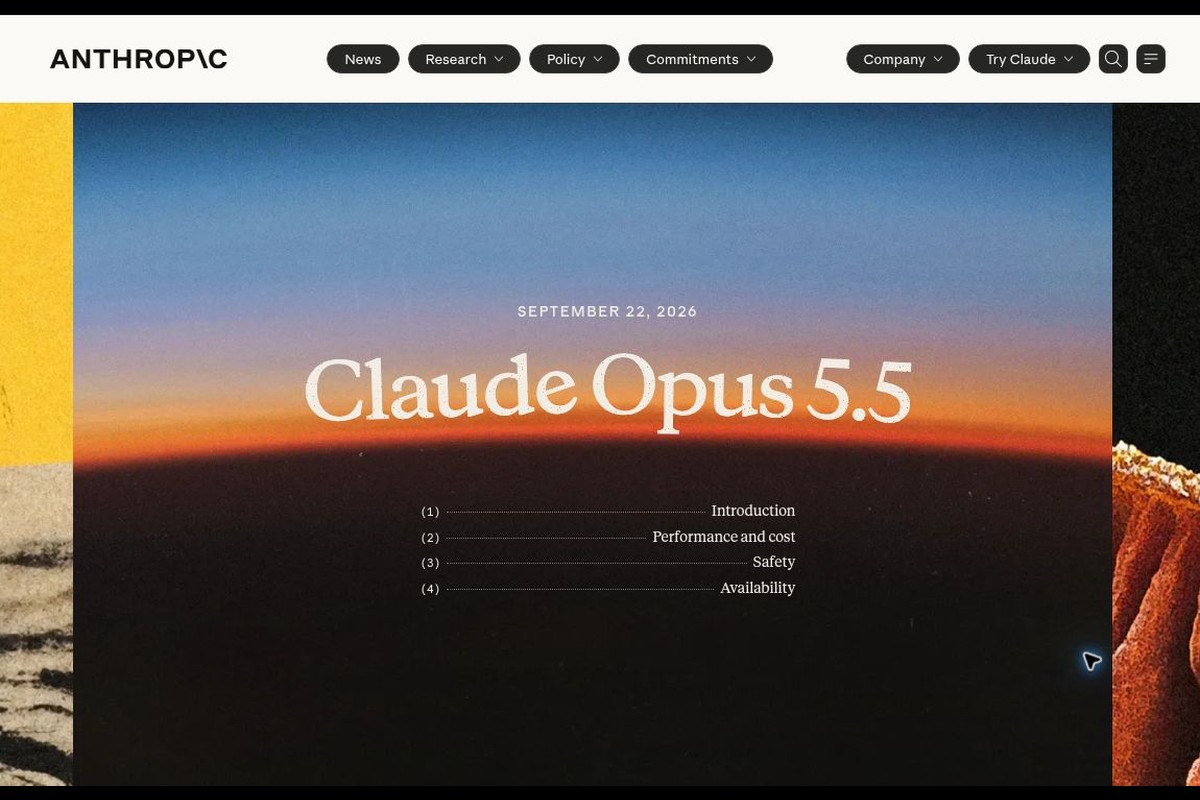
Opus 5.5, released on September 22, 2026, is designed for complex programming and knowledge work that requires continuous decision-making; Sonnet 5.5, released on September 28, is better suited for everyday tasks with clear requirements that call for rapid iteration, as well as bug fixes and the creation of office documents. Haiku 5.5, launched on October 7, focuses on high-frequency tasks such as classification, extraction, and summarization. Fable 5.1, released on September 1, is suitable for more challenging reasoning and long-process tasks; Mythos 5.1 is a restricted-access configuration and should not be considered a version available to all standard accounts.Opus Announcement,Sonnet Announcement,Haiku Announcement,Fable Product Page
claude-opus-5-5; Start by evaluating quality, latency, and costs using a small number of real samples, then scale up usage.Getting Started with the APIStandard API pricing per million input/output tokens: $4/$20 for Opus 5.5, $2/$10 for Sonnet 5.5, and $10/$50 for Fable 5.1; separate rules apply for caching, tools, fast mode, and cloud platform billing. High-risk requests in the cybersecurity and biotechnology fields may trigger additional safeguards or model fallback; general product access does not grant restricted research permissions. Available models and quotas vary by subscription plan; the per-API unit price should not be interpreted as the total subscription cost. Access must comply with official supported regions and account requirements; long-context processing does not guarantee that every piece of information is used correctly, and critical facts and actions still require verification.Billing Information,Supported Regions
| offerings | Focus and Applicable Tasks | Things to Keep in Mind When Choosing |
|---|---|---|
| Claude Opus / Sonnet 5.5 | Complex knowledge work, code iteration, and documentation production | Select the appropriate model based on task difficulty; access control is required for agent operations. |
| GPT-6.1 Sol/Terra | Sol balances complex task capabilities with cost; Terra focuses on visual understanding and computer operation | The model must be adapted to the actual tooling environment; it cannot be based solely on a single quote. |
| Gemini 4 Argon | Complex Reasoning, Agents, and Multimodal Tasks in the Google Ecosystem | Verify Product Onboarding, Subscriptions, and Developer Access Requirements |
Basis for Comparison:OpenAI Model Catalog,Gemini Official Introduction. When selecting a system, you should use your own task samples; do not treat the vendor’s benchmarks as a direct ranking of real-world performance. We recommend tracking completion rates, the number of manual reworks, and the total cost of the task. For open-ended tasks that require ongoing evaluation, start by assessing Opus; for clearly defined, small tasks, try Sonnet or Haiku.


 简体中文 简体中文
 English