
ChatGPT can generate interactive tools on the spot, while smaller AI applications must explain to users why they should come back
When users need a split-bill tool on the fly, they might have previously searched for a website or downloaded an app. If a chat window could instantly generate an interface that’s clickable, fillable, and capable of performing calculations, the process would be much shorter. For teams developing lightweight AI tools, this raises a direct question: After users complete their first task, what reason would they have to open your product specifically?
OpenAIThe Intelligent UI released on October 7 has brought this issue even more into the spotlight. This article focuses on the impact of this change on app value and retention, rather than a comparison of the capabilities of the various GPT-6 models.As it becomes easier and easier to “create a functional interface,” the ability to consistently serve the same user will become even more important.
I. Real-time interface, bridging the gap between identifying a problem and taking action
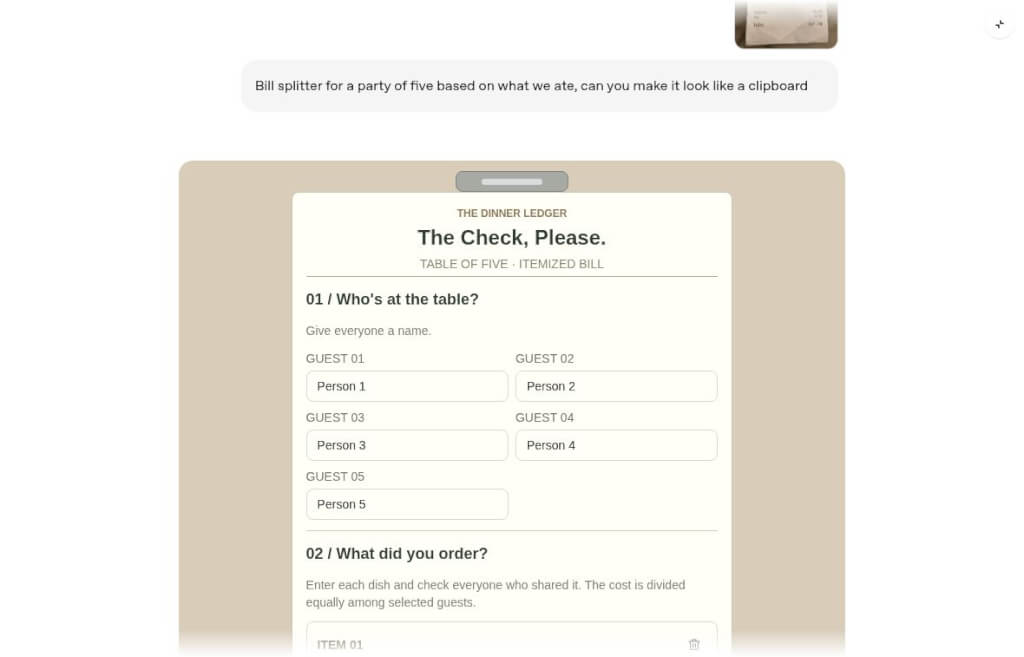
groundOfficial Introduction to OpenAIIntelligent UI can combine text, graphics, buttons, forms, and charts within a conversation to create interactive experiences. Official examples include a split-bill tool, a savings calculator, and mini-games; it is built on a native component library and uses a compilation mechanism that renders the interface as it is generated, allowing content to appear gradually.
This means that some requests can go directly from a single sentence to the execution phase. Users don’t have to first convert their requests into search keywords and then compare several websites with similar functionality. For low-frequency, one-time tasks with relatively clear inputs and outputs, this convenience is very appealing. However, while the official demo can demonstrate the interface design, it cannot directly prove that users of standalone apps have switched to this platform as a result.
The conclusion of this article is that if a product’s main selling point is merely “packaging a general-purpose model into a form,” it will need to provide a more compelling rationale for use in the future. Whether the same functionality can be generated is only the first layer of pressure; the registration, learning, and switching costs users must incur to use it will ultimately influence their decision.
II. First, distinguish between single-use tools and products intended for ongoing use
A temporary expense-sharing tool may naturally become obsolete once its calculations are complete. The fact that it is used infrequently does not mean the product has failed. Another type of tool, however, handles ongoing tasks—such as merchants repeatedly updating quotes, teams updating project progress weekly, or individuals organizing study materials over the long term. Both types can have simple interfaces, but the service responsibilities behind them are clearly different.
Ongoing tasks require maintaining a history, explaining changes, facilitating collaboration among multiple users, and ensuring that the next action picks up where the previous one left off. Suppose a quoting tool knows which prices are valid, who approved discounts, and which version was sent to the client; in that case, the reasons users provide for their feedback would be much clearer. These are examples of product design used to illustrate differences; they are not a statement of the current scope of Intelligent UI’s functionality.
To determine whether a product is easily replaceable, ask yourself: If the interface were to be redesigned tomorrow, what would users lose?If the answer is a few publicly available formulas and an attractive layout, the difference may be limited; but even if what is lost is verifiable data, consistently maintained records, and work results agreed upon by multiple people, the product still has tangible value that can be accumulated.
III. The easier it is to generate an interface, the more important it is to have someone responsible for ensuring its accuracy
Interactivity does not necessarily mean the tool can be used with confidence. Just because a slider can change a chart does not guarantee that the calculation rules are correct; just because a form submits successfully does not mean the data has been validated. Especially when the numbers generated by the tool will be included in quotes, schedules, or formal reports, users need to know the data sources, calculation methods, validity dates, and scope of application.
This provides a clear path for improvement in vertical applications. Products can translate industry rules into testable constraints, maintain reliable data update channels, and provide clear explanations for exceptional cases. Even if the interface is generated by AI, critical calculations can still be performed by validated programs, and the results will retain sufficient evidence for human review.
The resulting competitive focus isWho is willing to continuously maintain and interpret the results?. A small team doesn’t necessarily have to cover all needs; it can focus on making a narrow use case stable: ensuring users know when it can be used, when they must double-check, and how to correct any issues. The more convenient a general-purpose entry point is, the more worthwhile it is to maintain such clear professional boundaries.
IV. Retention metrics should align with the rhythm of user tasks
Once new features are launched, the number of times they’re used and the number of users trying them out tend to increase quickly. However, it takes longer to determine whether users are simply trying out the new interface or actually incorporating it into their work. For low-frequency tools, whether users open the app the next day may not be that important; for work applications that require weekly deliverables, whether users continue to use the tool for their next set of tasks is a more telling indicator.
Product teams can evaluate progress based on real-world tasks: Was the task completed on the first attempt? Did the team have to explain the context from scratch the second time? Were the results adopted? Did the work result in subsequent rework? The performance of the same group of users in subsequent tasks is a better indicator of sustained value than that of a constantly rotating pool of new users. You don’t need to include all these metrics on the Kanban board; start by focusing on the few that are most closely related to your core tasks.
A reasonable way to retain users is to reduce the burden of their next task.Saving useful settings, allowing users to export their records, and making it easy for collaborators to view them can all help foster good habits. Conversely, if you rely on blocking exports and creating barriers to exit to keep users coming back, the short-term numbers may look good, but it will be difficult to build long-term trust in the product.
V. Small teams can scale back their commitments and then ensure a complete delivery
Faced with the expanding scope of general-purpose AI, independent developers are often tempted to keep adding features. However, the more features there are, the greater the data and maintenance burdens become, and small teams may end up sacrificing both speed and focus. A better approach is to make specific commitments: for whom, by when, and what deliverable will be completed.
For example, rather than offering a broad “AI office assistant,” you could start by addressing a specific type of data verification task that recurs weekly in certain companies. The interface can be simple and the features minimal, but it needs to seamlessly connect data entry, result verification, collaborative confirmation, and delivery/export. The opportunity here lies in understanding the process and ensuring continuous operation; whether it’s suitable as a standalone app depends on users’ actual usage frequency and willingness to pay.
An intelligent UI can also serve as a source of insights for product teams to identify user needs: which ad-hoc tools are repeatedly requested, which fields always need to be re-entered, and which results users continue to process even after leaving the conversation. These recurring pain points may point to needs worth addressing over the long term.Since tools can be created at any time, a product worth remembering must make things easier for users the next time they use it—and consistently deliver on that promise.
Information current as of October 14, 2026. Product facts are based on OpenAI’s “GPT-6 and Intelligent UI for Everyone,” published on October 7, 2026. This article does not cite actual data on user churn or retention from standalone applications; assessments regarding competition, retention, and product opportunities are based on industry analysis of this capability.
© Copyright notes
The copyright of the article belongs to the author, please do not reprint without permission.
Related posts



No comments...
 简体中文
简体中文  English