Evaluate the model's performance within the complete engineering system
A model may perform well in a notebook, but once deployed in a live production environment, it may encounter issues such as changes in input data, increased latency, insufficient feedback, or maintenance challenges. *Designing Machine Learning Systems* focuses precisely on these interface points: how to ensure that data, models, and services continue to work together toward practical goals.
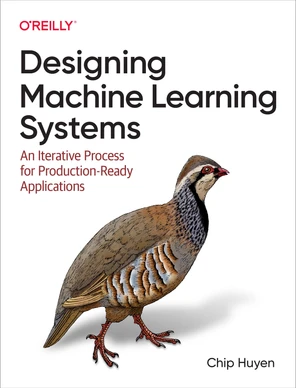
This entry introduces Chip Huyen's2022 Original English Version. The official O’Reilly page lists the publication date as May 2022, with 386 pages, and targets intermediate to advanced readers. It is best suited as a long-term engineering resource and should not be marketed as a new book for 2026 simply because of the growing popularity of AI.View the Publisher's Catalog.
Why It's Still Worth Adding to Your AI Reading List
According to the author’s official website and the associated repository, this book has been translated into more than 10 languages. While this indicates that it has a cross-lingual readership, it does not necessarily translate to its current position on the bestseller lists. Chip Huyen previously taught a course on machine learning systems at Stanford, and the book’s development is linked to that teaching experience.About the Authortogether withAuthor's Reading ListCan be used to verify background information.
One approach worth emulating is this: whenever a technical decision is made, clearly state which objective it serves, what data it relies on, and how issues will be detected and resolved. This practice can also help today’s large-model application teams avoid focusing solely on model names while neglecting system behavior.
Main Themes: Data, Evaluation, Services, and Feedback
The official table of contents begins with an overview of machine learning systems and the definition of objectives, then moves on to data engineering, training data, features, model development, and offline evaluation, before discussing issues such as deployment, distribution shifts, and monitoring. The author clearly states that this book focuses on design decisions and is not a tutorial containing extensive step-by-step code.Official Companion RepositoryProvides a table of contents, chapter summaries, and supplementary resources.
- How to Translate Goals into Metrics:We recommend that readers define both business objectives and technical metrics and check to see if there might be any cases where the two are at odds with each other.
- How Data Influences Conclusions:Pay attention to the data sources, time frames, and sample coverage. First, explain who the evaluation set represents, and then explain how high the scores are.
- How to Continue Learning After Deployment:Set up observable signals for the service to clearly define who is responsible for monitoring exceptions, when to roll back, and when to update the model.
Suitable for those who are crossing which threshold
If you’re responsible for integrating experimental models into production services, or if you need to coordinate work involving data, algorithms, and platforms, this book is a great addition to your desk. Data scientists can use it to gain a deployment perspective; software engineers can use it to understand the unique challenges posed by data dependencies; and technical leads can use the chapters to organize design reviews.
Readers with no prior experience may need to brush up on the basic concepts of machine learning first. For personal side projects, there’s no need to replicate all the components of large-scale systems: what’s more important is understanding the problem and choosing the simplest, most reliable solution for the current scale. As you read, keep asking yourself, “Is this level of complexity necessary to solve a problem I’ve actually encountered?”
We recommend that you write your own system description as you read.
- Select a specific scenario.Explain users, inputs, outputs, and the cost of failure on a single page.
- Plot the data and the forecast path.Identify where the data comes from, where it is transformed, who has access to it, and which steps are prone to inconsistencies.
- Design Evaluation and Release Process.Document the baseline, acceptance criteria, phased rollout plan, and rollback procedures.
- Take responsibility for any issues that arise after launch.Clearly define the monitoring targets, the personnel responsible for handling alerts, and the inspection frequency to ensure that, after deployment, no one is left in the dark about whether the model is still valid.
The outcome of this process can be a clearer design document, rather than yet another new framework. Being able to explain why a particular component isn’t needed at this time is also a valid engineering decision.
How to Choose Between "AI Engineering" and...
station"AI Engineering"While the former focuses on developing applications using existing foundational models, this book is better suited for gaining a holistic perspective on machine learning systems—from data to production. If your immediate tasks involve retrieval, prompting, and foundational model applications, start with *AI Engineering*; if your main challenges involve data workflows, deployment and maintenance, and cross-team collaboration, this book is worth prioritizing.
Era Boundaries to Watch For
This book was published in 2022 and should not be used as a substitute for the latest documentation on current large-model APIs, Agent protocols, or specific cloud services. The tools and engineering environments described in this book may have changed; while studying, focus on the design principles, and when implementing, verify the information against current official documentation. Do not treat historical examples as performance guarantees for your own projects.
The cover image is from O’Reilly’s official book page; copyright belongs to the respective rights holders. This article is an original reading recommendation and does not provide unauthorized downloads of the entire book.Official Reading and Purchasing Portal.;Authors' Open Catalogs and Learning Resources.




 简体中文
简体中文  English