Introduction - - - - - - - - - - - - - - - -
Artificial Intelligence is sweeping the world with an unstoppable momentum. Whether it's the iPhone's neural network engine, AlphaGo's Go algorithm, or drones and deep learning ...... there is no doubt that AI is rewriting the shape of industries. Like the previous popularity of personal computers, the Internet and big data, technological innovation has once again greatly changed our work and life. So how exactly should we look at AI? In "AI MinimalisteconomicsIn the book "Learning", three economists who are deeply involved in the field of artificial intelligence and decision-making give clear answers. They dissect the dynamics and grasp the essence with solid economic theories, summarizing the ever-changing appearance of the AI field as an ever-improving machine prediction capability. Whether you are an entrepreneur who needs to make decisions, an ordinary person who is still planning his or her career, or a thinker facing drastic social changes, you can get important inspiration from this book.
作者简介 · · · · · ·
Ajay Agrawal Founder of the Disruptive Innovation Lab, Professor of Strategic Management at the Rotman School of Management at the University of Toronto, Fellow at the National Institute of Economic Research, and co-founder of Next AI. Joshua Gans Chief Economist of the Disruptive Innovation Lab, Professor of Strategic Management at the Rotman School of Management at the University of Toronto, and a contributor to The New York Times, Harvard Business Review, Forbes, and many other media outlets. Avi Goldfarb Chief Data Scientist at the Disruptive Innovation Lab, Professor of Marketing at the Rotman School of Management at the University of Toronto, and a Fellow at the National Economic Institute. His research findings have been reported by many media outlets. Translator: Lujia Senior translator, specializing in popular economics, social psychology, economic management and popular science books, has published a number of critically acclaimed translations, including The Economics of Milk Cola (won the Wenjin Book Prize in 2008), Influence, The Rational Optimist, and others.
Catalog - - - - - - - - - - - - - - - - - - - - - -
Chapter 1 Introduction
Chapter 2 Cheap Changes Everything
Chapter 3 The Magic of Prediction Machines
Chapter 4 Why They Call It Intelligence
Chapter 5 Data is the oil of the new generation
Chapter 6 The New Division of Labor Chapter 7 Deconstruction Decisions
Chapter 8 The Value of Judgment Chapter 9 Predicting Judgment
Chapter 10: Taming Complexity
Chapter 11 Fully automated decision-making
Chapter 12 Deconstructing Workflow
Chapter 13 Decomposing Decisions
Chapter 14: Redesigning jobs
Chapter 15 Artificial Intelligence in the Executive Office
Chapter 16 When Artificial Intelligence Changes the Enterprise
Chapter 17 Your Learning Strategies
Chapter 18 Managing Artificial Intelligence Risks
Chapter 19 Beyond Business
Related Books
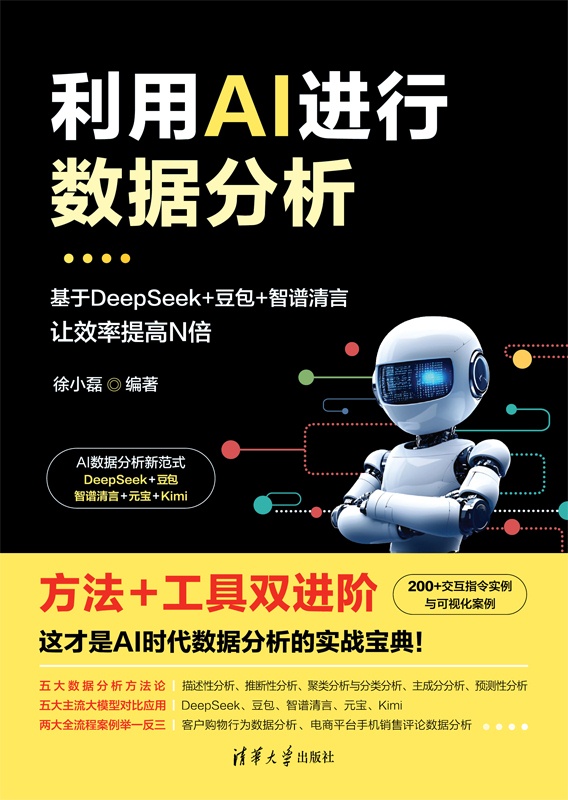
Integrate tools such as DeepSeek into your daily analysis workflow, focusing on prompt creation, data analysis tasks, and result validation; ideal for operations, business, and data professionals who want to learn by doing.
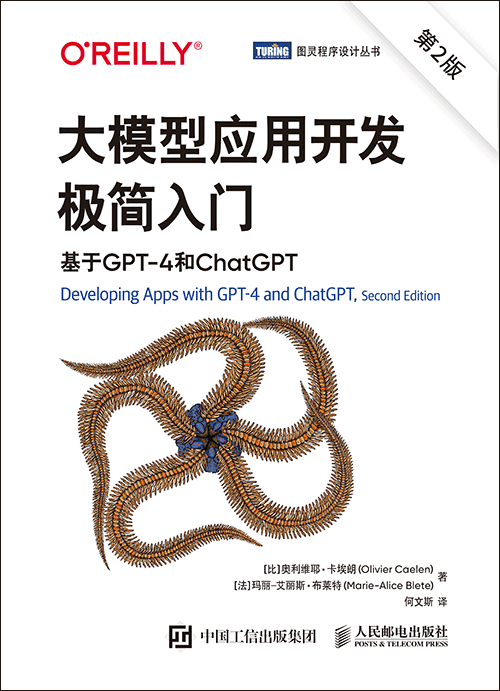
A Minimalist Introduction to Large Model Application Development: Based on GPT-4 and ChatGPT (2nd Edition)
Intended for beginners in application development with a basic understanding of Python, this book focuses on developing an engineering mindset around text generation, question-answering, summarization, and RAG. When reading, be sure to distinguish between stable concepts and interfaces that are subject to change.
Artificial intelligence: a modern approach (4th ed.)
An authoritative classic that systematically explains AI principles and techniques, with equal emphasis on theory and practice, and is a must-read for AI learners and researchers.
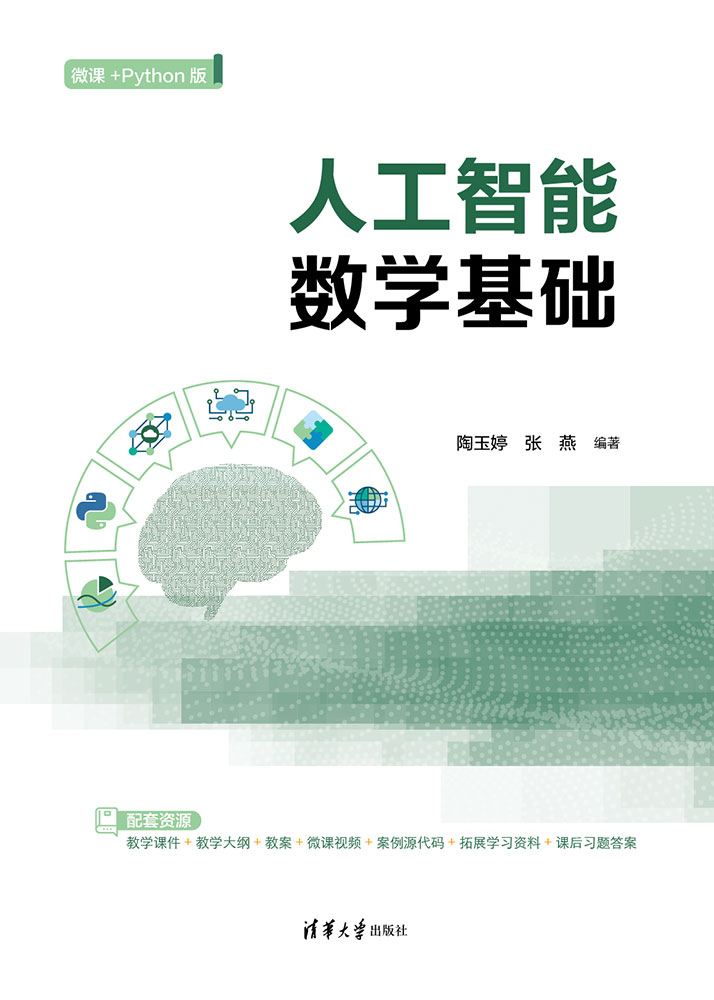
Mathematical Foundations of Artificial Intelligence (Micro-lectures + Python Edition)
This course connects calculus, linear algebra, and probability and statistics to AI problems, making it ideal for strengthening your mathematical foundation while learning algorithms and testing your understanding through Python exercises.
No comments...