Grep AI is designed for business processes that require repeated information gathering, data verification, and exception handling. It uses operational experience to transform repetitive steps into reusable code and workflows, and supports self-service usage based on credits.
Grep AI It is an AI agent platform designed for repetitive decision-making tasks. Rather than focusing on generating a single piece of text, it helps teams codify business processes that need to be performed repeatedly, enabling the reuse of familiar steps and reserving reasoning for the exceptions that truly require handling.
The product was developed by Parcha Labs.Official DescriptionAccording to the report, AJ Asver and Miguel Ríos founded Parcha in 2023, initially focusing on enterprise verification, compliance, and due diligence; Grep launched a research preview in December 2025. On October 13, 2026, the teamAnnounced its acceptance into Y Combinator F26.
This type of product is best understood by asking, “Is it reliable when processing 100 cases through a single workflow?” How smoothly the system runs during the first demonstration is only part of the story; what matters more is whether, on the 20th attempt—when encountering missing files, conflicting information, or unfamiliar formats—the system can identify the issues and route them to the appropriate person.
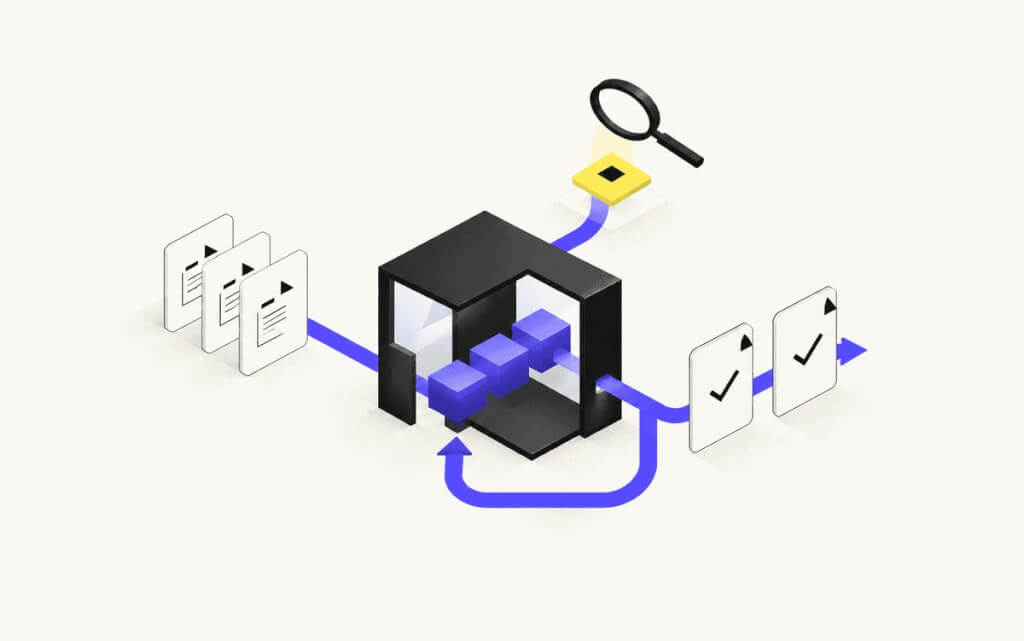
Grep AI Official Diagram of Repetitive Tasks and Reusable Workflows
Key Features of Grep AI
Convert Repeated Steps into a Reusable Process:The core mechanism described in the official documentation involves identifying fixed steps when similar tasks are run repeatedly, gradually converting some model calls into code and workflows, and allowing the agent to focus more on handling exceptions.
Task Execution and Process Documentation:The official website offers features such as managed agents, self-service creation, and audit trails. When making a selection, you should verify whether the audit trails provide sufficient information to answer the following questions: “What data was used?”, “Which steps failed?”, and “Who reviewed the results?”
Adjustments Related to Cost and Quality:The platform supports organizing and executing tasks based on constraints. Teams must still define their own acceptable accuracy rates, per-attempt costs, and failure handling procedures; “self-improvement” should not be interpreted as meaning that quality will automatically improve indefinitely.
During implementation, it’s worth establishing a fixed test suite that includes both typical cases and ambiguous edge cases. After each adjustment, rerun the same set of inputs and compare the types of errors—not just the average speed. A process that runs faster but misses key fields does not count as an effective improvement.
What are some use cases for Grep AI?
Data Collection and Preliminary Verification:For example, organizing supplier materials, verifying company information, and checking document completeness. It is recommended that you first have the agent generate a checklist of items to be verified along with links to supporting evidence, clearly marking any missing information—and not simply assuming that something does not exist just because it “could not be found.”
Standardized Research Deliverables:When a team needs to consistently generate reports with the same structure for different subjects, it should first define the fields, source criteria, and time frames, and then assess which steps can be reused. Key conclusions should be traceable back to specific evidence to ensure that reports do not appear complete but lack traceability.
Operational Processes with Exceptions:This is a good starting point for exploring how to triage routine and complex cases. We recommend beginning with the “extraction of facts that require no additional judgment” and delegating decisions involving eligibility, risk management, or business commitments to designated human reviewers.
When selecting pilot projects, the frequency of repetition should be taken into account. For tasks that occur only a few times a month and involve highly variable input, the cost of maintaining the process may outweigh the time saved; for tasks involving a large volume of similar input and stable review criteria, it is easier to assess whether the ongoing investment is worthwhile.
How do I use Grep AI?
Clearly describe the input and output.Organize the tasks into a one-page guide that lists data sources, required fields, acceptable evidence, and situations that require manual review. Use anonymized samples as much as possible to complete the initial trial.
Create the first proxy.Go to the self-service registration portal on the official website, define tasks according to the product workflow, and run a small number of test cases. The official website uses a "credits" system; please do not assume that the self-service portal offers unlimited free use.
Establish control results.Have someone familiar with the business first flag a batch of cases to check whether the agent has omitted facts, misunderstood the rules, or jumped to conclusions, and record each type of issue separately.
Gradually resume the stabilization steps.Start with verifiable steps such as format conversion and field validation, observe the results and usage after adjustments, and then expand to more cases.
Keep an exit strategy.Clarify how to handle timeouts, tool failures, and results with low confidence. After deployment, conduct periodic sample reviews and record the rule versions to facilitate historical analysis.
Before making a purchase, we recommend inquiring about the actual scope of credit settlements, additional fees for models and tools, whether failed tasks are billed, and any restrictions on batch runs. You should combine the testing costs with the time required for manual review to determine the overall cost-effectiveness of the process.
If the input consists primarily of Chinese contracts, scanned documents, or multilingual materials, you should also test text recognition, field extraction, and final decision-making separately. Format issues and business interpretation issues should be tracked separately so you can determine whether to improve data quality or adjust process rules. Actual performance with Chinese text and local network conditions should be evaluated through real-world testing.
How does Grep AI compare to similar products?
offerings
Main Approach
Issues Worth Testing Even More
Grep AI
Gradually transform repetitive steps into reusable code and processes
As the number of similar cases increases, how do quality, costs, and exception handling change?
Connecting Corporate Knowledge, Tools, and Shared Agents
Is the primary need case batch processing or team knowledge collaboration?
When making comparisons, you can prepare a set of entirely new test cases to avoid relying solely on samples that have been repeatedly fine-tuned during development. In addition to the overall accuracy rate, you should also record separately the proportion of serious errors, the percentage of cases requiring manual intervention, and the completeness of evidence; these metrics provide a more accurate reflection of real-world value than a demonstration report.
What makes Grep AI noteworthy is its approach to treating duplicate detection as a process of continuous improvement. For teams with a stable workload and well-defined review rules, starting with a clearly defined process makes it easier to achieve reliable results than pursuing full automation right away.


 简体中文
简体中文  English