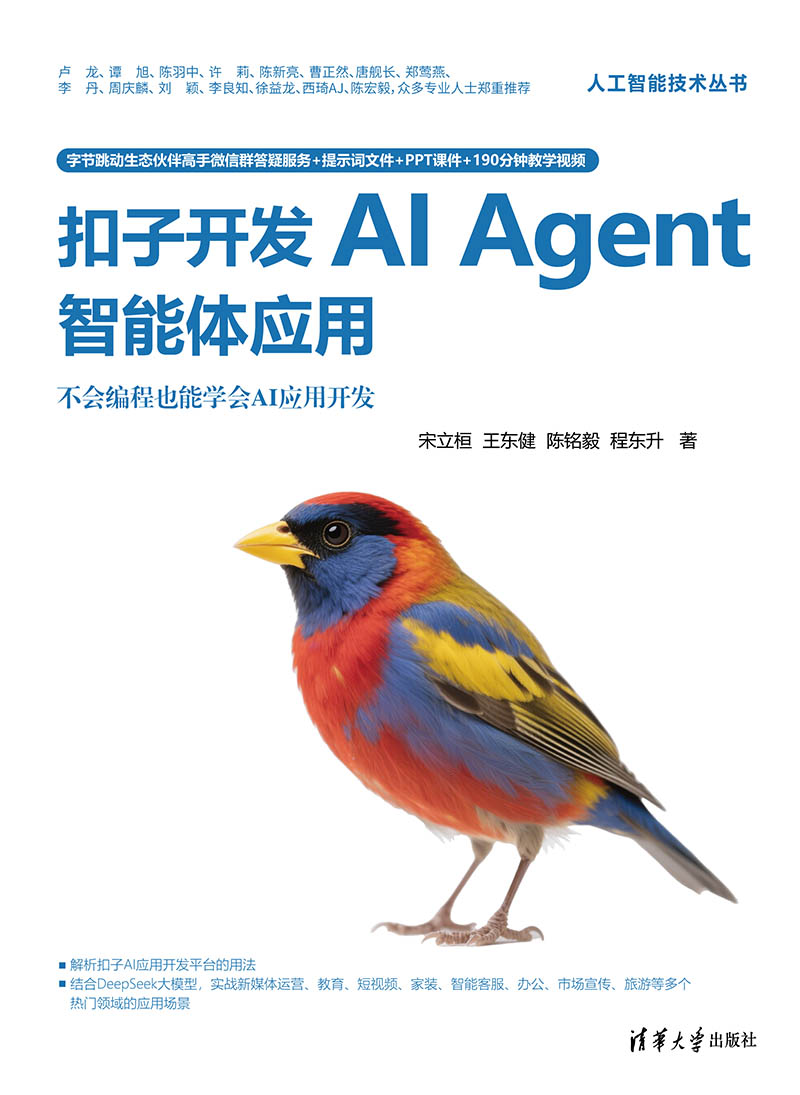
Kouzi Develops AI Agent Applications
Learn how to develop AI agent applications through hands-on projects focused on the Kouzhi platform’s workflows, knowledge base, prompts, and database.
A technical reference book on Chinese large language models, written by a research team at Renmin University of China, is intended for readers with a foundation in deep learning who wish to establish a systematic technical framework.
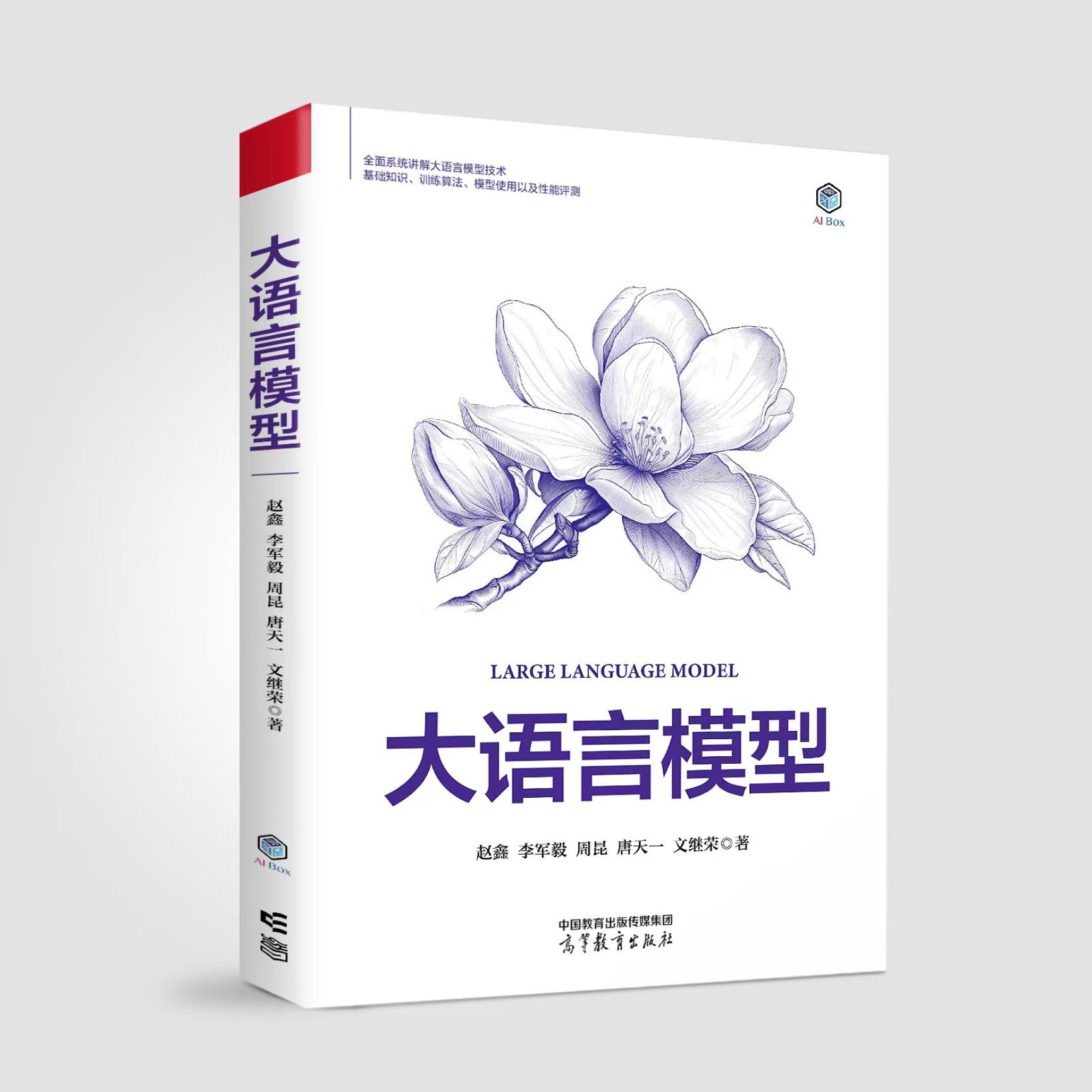
Large Language Models; Zhao Xin, Li Junyi, Zhou Kun, Tang Tianyi, Wen Jirong; Higher Education Press; December 2024; ISBN 9787040634969
Pre-training, fine-tuning, alignment, and inference are often discussed in isolation. *Large Language Models* organizes these stages into a single technical roadmap, helping readers understand the objectives, methods, and interrelationships at each stage. It is ideal for those looking to transition from reading scattered papers to systematic study.
The main topics cover the fundamentals of language models, resources and data, model architectures, pretraining, instruction-based fine-tuning, human alignment, decoding and deployment, prompt learning, and evaluation. The accompanying website provides course materials and code that can be used for supplementary study. The above serves as a topic overview; the continuously updated online course catalog should not be equated with the table of contents in a printed book.
Suitable for students, algorithm engineers, and researchers with a foundation in deep learning. Readers who are only interested in learning office-related prompts and are not yet ready to delve into algorithms may want to start with an application-oriented book and then return to this book to fill in the gaps in their understanding of the underlying principles.
The Chinese explanations and supplementary resources provided by the author reduce the effort required to find information. It is recommended that you first create an overall flowchart, then delve into a specific chapter relevant to your task, and verify concepts using code to avoid simply memorizing terms while overlooking their applicable conditions.
The official publication is the December 2024 edition. Subsequent print runs listed by the publisher do not constitute new editions. The author notes that there are differences between the early publicly available electronic draft and the official print edition; some application-related content was not included in the official publication, so care should be taken to distinguish between versions when citing the work. The acquisition and redistribution of course materials must also comply with the instructions on the author’s page.
Book cover source:Highland AI College at Renmin University of China.



 简体中文 简体中文
 English